Sleep Advice
Memory Foam vs Wool vs Synthetic Pillows
Pillow filling changes far more than what's inside the case. It affects feel, compression, adjustability, care and price — so the useful question isn't which material is best, but which makes most sense for you.
The Velquies Editors · Published 25 September 2026 · Updated 25 September 2026
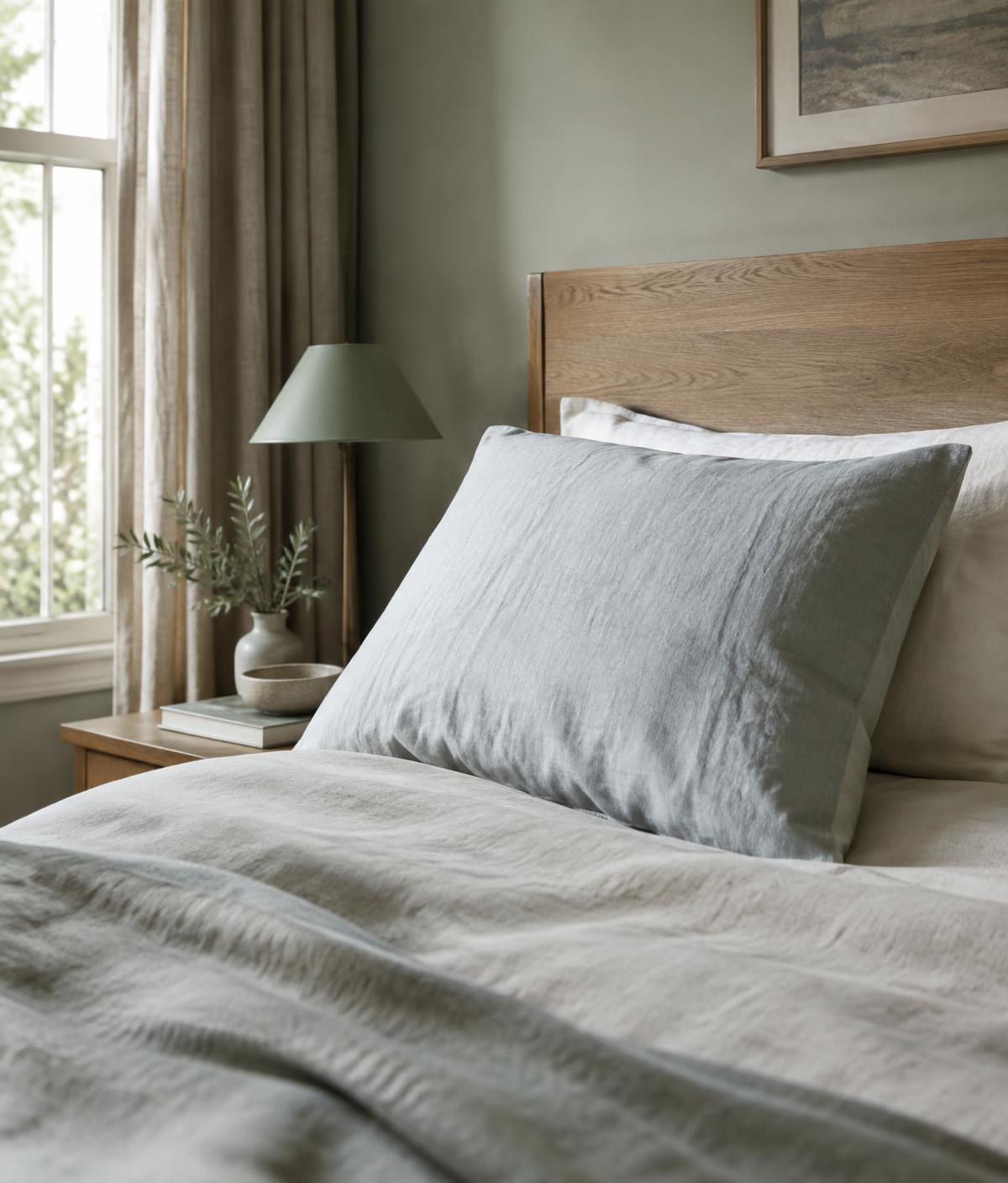
Pillow shopping becomes considerably more complicated once you discover that even the stuffing requires a decision.
The short answer: there is no universally best pillow filling. Memory foam, wool and synthetic fillings behave differently, and the way a pillow is constructed matters almost as much as the material inside it.
1. Start with construction, not marketing
“Memory foam”, “wool” and “synthetic” are broad categories, not guarantees of a particular feel. A solid, contoured foam pillow behaves quite differently from one filled with shredded or cubed foam. Loose wool behaves differently from a fixed wool pad. Hollowfibre can be used at different densities and in different shapes.
So it's more useful to think about material, construction, loft and firmness together, rather than judging a pillow on its material alone.
2. Memory foam
Memory foam is a viscoelastic polyurethane foam: it is designed to give way slowly under pressure and then recover its shape afterwards.
In practice, that can mean a more conforming feel, and often a less traditionally “fluffy” one than a fibre-filled pillow. A solid moulded foam pillow usually has a fixed shape and height, while designs using shredded or cubed foam may allow some adjustment. Care instructions also tend to differ between a removable cover and the foam itself.
Two pillows in The Pillow Edit show how different foam constructions can be. The TEMPUR Original SmartCool is a contoured pillow made from TEMPUR's own material; TEMPUR offers it in three sizes. The Panda Hybrid Bamboo uses memory foam infused with bamboo and charcoal, with what Panda describes as airflow features in the foam.
Memory foam is sometimes described as sleeping warm, but that isn't true of every foam pillow — and cooling covers or treatments can't guarantee a cool night either. How warm any pillow feels varies from person to person and bedroom to bedroom.
3. Wool
Wool filling brings a distinctly different construction. Where the wool is loose rather than fixed in a pad, some designs let you remove filling or add more.
The Woolroom Deluxe Washable Wool Pillow is our real-world example. Woolroom's own information describes loose wool filling, an adjustable feel and extra filling being available. Its care instructions ask you to take the wool out before washing the outer cover.
As a natural fibre, wool has a different feel from foam, and it may appeal particularly to people who are looking for natural materials. Woolroom makes its own claims about temperature and allergens for its products; those are manufacturer statements about specific products, not general scientific conclusions about all wool pillows, so we don't repeat them as such here.
4. Synthetic hollowfibre
Pillows filled with hollowfibre or other polyester fibres are widely available and can give a more conventional fibre-pillow feel.
The Kally Ultimate Side Sleeper is an example of a shaped pillow using hollowfibre filling with a cotton outer cover.
Synthetic pillows are often found at more accessible prices, and many people find their feel familiar. But not every synthetic pillow is cheap, washable, hypoallergenic or long-lasting: construction and quality vary considerably from one to the next.
5. What about hybrid pillows?
The categories increasingly overlap. The Simba Hybrid Pillow, for example, combines removable foam Nanocubes with a polyester-fibre comfort filling, alongside other construction details.
That's a useful reminder that a simple material label doesn't always describe a pillow well. Hybrid is another kind of construction, not a better one.
6. Which feels softest?
There's no universal ranking. How soft a pillow feels depends on the material, how much filling there is, its density, how the pillow is built and how far it compresses under your head.
A material name on its own can't reliably tell you whether a particular pillow will feel soft or firm.
7. Which is easiest to care for?
It's better to compare manufacturers' instructions than rely on stereotypes. Some synthetic pillows can be washed whole, while some foam cores can't be washed at all. Removable covers often have their own instructions, and wool designs can have their own procedures.
In The Pillow Edit, for example, Panda advises that its foam is wipe-clean only, with a cover washable at up to 30°C. TEMPUR's cover can be machine washed up to 40°C, but the core must not be washed. Simba's zip-off cover is machine washable at 40°C, and Woolroom's outer cover can be washed once the wool has been removed.
The practical conclusion: check the care label on the specific pillow rather than assuming from the filling.
8. Which lasts longest?
This is where generalisations are least helpful. How long a pillow lasts depends on the quality of its materials, its construction, how it's used and how it's cared for. We don't think a single replacement interval, or a claim that one material always outlasts another, can be stated reliably.
It's also worth remembering that a warranty's length isn't the same thing as a pillow's expected lifespan.
9. Which should you choose?
These are starting points, not rules:
- Consider memory foam if you like a more conforming feel or a shaped construction, and are comfortable with its particular care requirements.
- Consider wool if natural materials — and, in adjustable designs, removable loose filling — appeal to you.
- Consider synthetic fibre if you prefer a more familiar fibre-filled feel or are looking at more accessible price points.
- Consider a hybrid if you value characteristics from more than one construction.
Filling is only one part of the decision. Height matters too — see How High Should Your Pillow Be? — and if you're drawn to loose-fill or foam-cube designs, Are Adjustable Pillows Worth It? sets out the trade-offs.
Pillow fillings at a glance
| Filling | Typical construction | Feel can vary by | Adjustability | Care considerations | Example from The Pillow Edit |
|---|---|---|---|---|---|
| Memory foam | Solid moulded or contoured foam; shredded or cubed foam | Foam type, density, shape | Usually fixed if solid; some shredded or cubed designs adjust | Foam cores often not washable; covers vary | TEMPUR Original SmartCool; Panda Hybrid Bamboo |
| Wool | Loose fill or fixed pad | Amount of wool, how it is packed | Possible where the filling is loose | Filling may need removing before washing the cover | Woolroom Deluxe Washable Wool |
| Synthetic fibre | Hollowfibre or polyester fibre, loose or shaped | Fibre density, amount of fill, shape | Usually fixed | Varies widely; check the label | Kally Ultimate Side Sleeper |
| Hybrid | A combination, such as foam pieces with fibre | The mix of materials and layout | Depends on the design | Components may have different instructions | Simba Hybrid Pillow |
A general guide rather than a ranking. Product examples are based on each manufacturer's published information.
The Pillow Edit deliberately includes foam, wool, synthetic and hybrid constructions because there isn't one material we'd recommend to every sleeper.
The Velquies view
The filling tells you something about a pillow. It doesn't tell you everything. We'd choose by feel, height and construction first — then treat the material as another part of the decision rather than the answer printed on the label.
Key takeaways
- There is no universally best pillow filling.
- Construction, loft and firmness matter almost as much as the material.
- Memory foam, wool and synthetic fibre each feel and behave differently — and hybrids combine them.
- Care instructions vary by product, so check the label rather than assuming from the filling.
- Lifespan depends on quality, construction, use and care; a warranty isn't a lifespan.
Sources and references
- Manufacturer information: TEMPUR Original SmartCool — official TEMPUR UK product page (uk.tempur.com), checked September 2026.
- Manufacturer information: Panda Hybrid Bamboo Pillow — official Panda London product page (pandalondon.com), checked September 2026.
- Manufacturer information: Woolroom Deluxe Washable Wool Pillow — official Woolroom UK product page (thewoolroom.com), checked September 2026.
- Manufacturer information: Kally Ultimate Side Sleeper Pillow — official Kally Sleep product page (kallysleep.com), checked September 2026.
- Manufacturer information: Simba Hybrid Pillow — official Simba UK product page (simbasleep.com), checked September 2026.
- Product descriptions are the manufacturers' own and are not independent evidence.
Some links on this page may earn Velquies a commission. This never determines what earns a place in The Edit. Read our affiliate disclosure.