Sleep Advice
How to Make Waking Up in the Dark Easier This Winter
Dark mornings don't require military discipline. A few thoughtful changes to light, routine and the way you wake can make winter mornings considerably less hostile.
The Velquies Editors · Published 25 September 2026 · Updated 25 September 2026
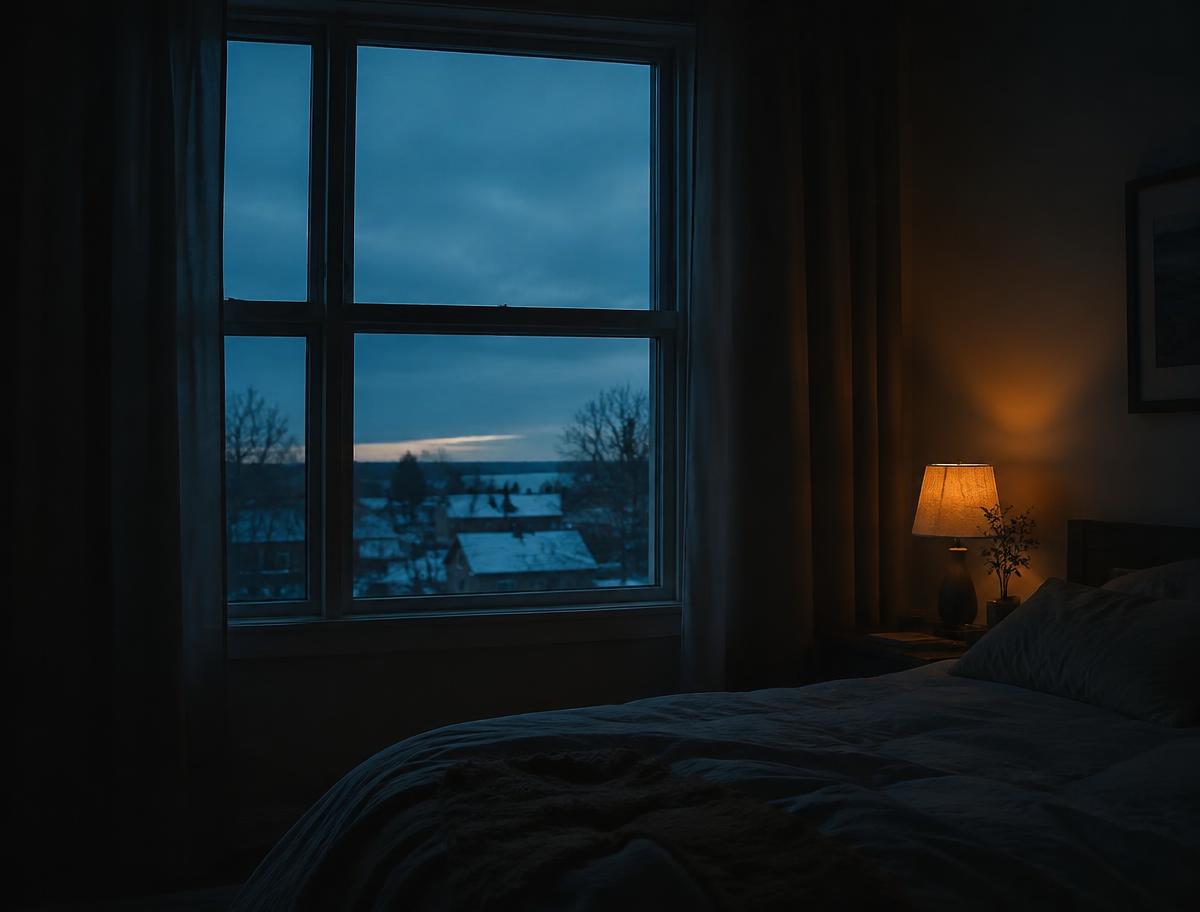
At 6.30 on a January morning, your alarm may insist the day has started. The view from the window can make a fairly convincing case that it hasn't.
For much of the UK autumn and winter, many of us get up well before sunrise. The darkness removes one of the usual cues that the day has begun, and if you are also short of sleep, or feeling the ordinary grogginess that follows waking, the two tend to compound each other. None of this is a failure of character. It is simply a harder set of conditions — and conditions can be adjusted.
1. Start with enough sleep, not a more aggressive alarm
No morning routine reliably compensates for consistently not getting enough sleep. A louder alarm may get you vertical; it will not make up the difference.
The NHS recommends keeping roughly regular sleep and wake times. In practice, that means avoiding dramatic swings between weekdays and weekends — a very late Saturday lie-in tends to make Monday's alarm feel earlier than it is. How much sleep you need is individual; the more useful goal is giving yourself a consistent opportunity to get it.
2. Make light part of the morning
Light is one of the most important environmental signals for the body's circadian system — the internal timing that helps organise sleep and wakefulness across the day.
When it is practical, getting some natural daylight after waking is worthwhile: opening the curtains once it is light, or stepping outside for a few minutes on the way to work. On the darkest mornings, ordinary indoor lighting can at least make your surroundings feel less night-like. It is worth being clear, though, that normal household lighting is not the same as clinical light therapy, and switching on a lamp does not “reset” your body clock.
3. Consider introducing light before the alarm
A sunrise alarm, or wake-up light, gradually increases the light in the bedroom over a set period before your wake time, so the room is already brightening when the alarm sounds. Our guide to how sunrise alarm clocks work explains the idea in more detail.
Research on artificial dawn is encouraging but modest. Some small controlled studies have found improvements in how sleepy or alert people feel after waking, and fewer complaints of morning grogginess; results on objective measures such as cognitive performance have varied. It will not suit or help everyone.
4. Make getting out of bed easier the night before
The first few minutes of a dark morning are a poor time for decisions. A little preparation the evening before removes most of them.
- Lay out tomorrow's clothes, including something warm to put on straight away
- Decide what breakfast will be
- Put keys, bag, glasses and anything else you need where you will need them
- Keep the route from bed to door clear and uncluttered, so it can be navigated half-awake
- Settle any small choices — what to wear, what to take — before bed rather than after the alarm
5. Put some distance between you and the phone
The NHS suggests putting phones and other devices away before bed. Keeping the phone off the pillow and out of arm's reach reduces the temptation to keep scrolling at bedtime.
If your phone is also your alarm, placing it across the room has a second advantage: switching it off becomes a deliberate act that requires standing up, rather than a reflex performed without opening your eyes.
6. Don't make snoozing a morality play
Popular sleep advice tends to treat the snooze button as a moral failing. The evidence is more nuanced than that.
One small laboratory study found that repeated snooze alarms prolonged sleep inertia — the grogginess after waking. Another controlled study, of people who habitually snooze, found that 30 minutes of snoozing cost only a modest amount of sleep, and either improved or did not affect performance on several cognitive tests immediately after getting up.
Neither study settles the matter, so Velquies won't tell you never to hit snooze. A more useful question is whether your repeated alarms genuinely help you wake, or simply stretch an unpleasant process over a longer period. If it is the latter, setting one alarm for the time you actually intend to get up may be worth trying.
7. Give yourself something recognisably morning-like
A dark morning can feel oddly shapeless. A few simple, repeatable actions help give it an edge: open the curtains if daylight has arrived, put the room lighting on, get washed and dressed rather than lingering in the half-light, and settle on one straightforward first activity — making tea, feeding the cat, a short walk.
The point is not that any particular step has special properties. It is that a familiar sequence asks very little of you at a time when you have little to give.
8. When difficult mornings may be more than winter
Not every hard morning is the fault of the season. Persistent difficulty sleeping or waking, excessive sleepiness during the day, or concerns about your mood shouldn't automatically be put down to dark mornings.
If problems like these continue or affect daily life, the NHS website is a sensible starting point, and your GP can help. This article isn't a way to diagnose seasonal affective disorder, insomnia or any other condition.
The Velquies winter-morning routine
- The night before: remove unnecessary morning decisions.
- At bedtime: protect enough opportunity for sleep.
- Before waking: optionally introduce gradually increasing light.
- On waking: get light into the environment and get out of bed deliberately.
- After waking: keep the first part of the routine simple and repeatable.
If darkness is the part of winter mornings you struggle with most, a wake-up light is one of the few bedside products designed specifically around that problem.
The Velquies view
Winter mornings don't need conquering. They need designing a little better. Enough sleep, less friction and a gentler transition from darkness to daylight will usually make a better starting point than simply finding a louder alarm.
Key takeaways
- Regular sleep and wake times matter more than a louder alarm.
- Morning light helps; household lighting is not the same as light therapy.
- A sunrise alarm is one option among several, with modest, mixed evidence.
- The evidence on snoozing is mixed — notice whether it helps you or not.
- Persistent sleep or mood problems are worth raising with your GP.
Sources and references
- NHS Every Mind Matters. How to fall asleep faster and sleep better. nhs.uk.
- Hilditch CJ, McHill AW. Sleep inertia: current insights. Nature and Science of Sleep. 2019;11:155–165.
- Van de Werken M, Giménez MC, de Vries B, Beersma DGM, Gordijn MCM. Effects of artificial dawn on sleep inertia, skin temperature, and the awakening cortisol response. Journal of Sleep Research. 2010;19(3):425–435.
- Giménez MC, Hessels M, van de Werken M, de Vries B, Beersma DGM, Gordijn MCM. Effects of artificial dawn on subjective ratings of sleep inertia and dim light melatonin onset. Chronobiology International. 2010;27(6):1219–1241.
- Ogawa K, Kaizuma-Ueyama E, Hayashi M. Effects of using a snooze alarm on sleep inertia after morning awakening. Journal of Physiological Anthropology. 2022;41:43.
- Sundelin T, Landry S, Axelsson J. Is snoozing losing? Why intermittent morning alarms are used and how they affect sleep, cognition, cortisol, and mood. Journal of Sleep Research. 2024;33(3):e14054.
Some links on this page may earn Velquies a commission. This never determines what earns a place in The Edit. Read our affiliate disclosure.