Sleep Advice
How Do Sunrise Alarm Clocks Work?
They imitate one of the oldest signals for waking up: increasing morning light. The interesting part is what that light may be doing before your alarm sounds.
The Velquies Editors · Published 25 September 2026 · Updated 25 September 2026
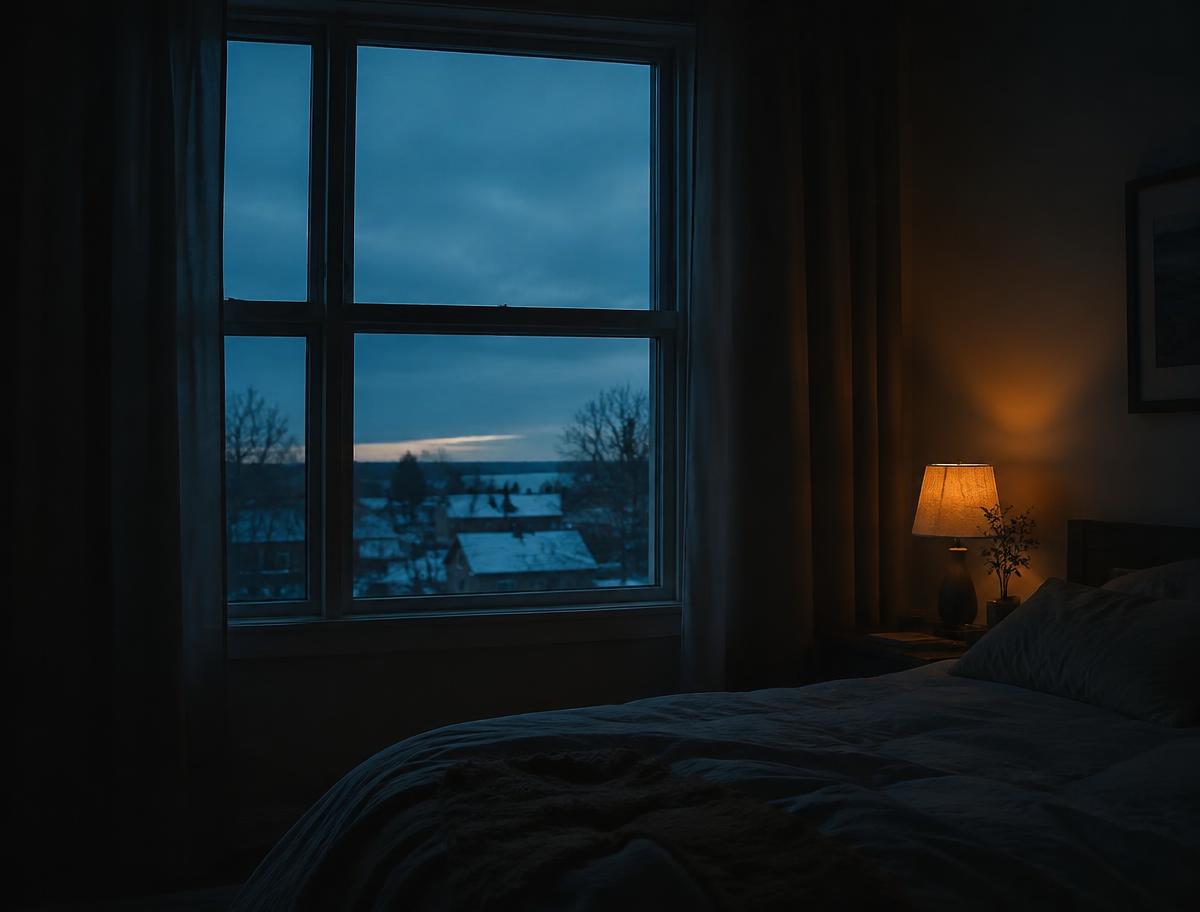
A conventional alarm begins at the precise moment you are supposed to be awake. Until then, nothing happens; then, all at once, everything does.
A sunrise alarm starts earlier. Over a set period before your chosen wake time — commonly somewhere between about 20 and 60 minutes, depending on the device and how you set it — it gradually increases the light in the bedroom. Many models then add an audible alarm when the time arrives.
Rather than asking darkness to become morning in the space of one ringtone, a sunrise alarm gives your bedroom some notice.
Light is part of the body's timing system
The body keeps time with an internal circadian system that runs on a cycle of roughly 24 hours. Of all the signals from the outside world that help keep it aligned with the day, light is the most important.
Light reaching the eyes provides timing information to the brain, which helps coordinate daily patterns of sleep and wakefulness. Appropriately timed morning light can influence that timing. That does not mean every bedside sunrise alarm “resets your body clock” — consumer devices are far dimmer than daylight, and how much any one of them shifts circadian timing is a separate question from whether it makes waking feel easier.
What happens before you wake?
The technique behind a sunrise alarm is known as dawn simulation. The light begins while you are still asleep, starting very dim and becoming progressively brighter as your wake time approaches — a compressed, indoor version of first light.
Waking is a transition rather than a switch, and the aim is to let some of that transition happen before the alarm. A sunrise alarm cannot, however, detect or choose which stage of sleep you are in, and it cannot guarantee you will wake at a particular moment.
The problem it is trying to soften is called sleep inertia: the temporary grogginess, reduced alertness and sometimes poorer performance most of us experience immediately after waking. It usually passes, but on a dark morning it can feel like it lasts well into the commute.
Does the light actually make waking easier?
There is some evidence that it can. Controlled studies of artificial dawn have found reductions in subjective sleepiness and sleep-inertia complaints, and improvements in how alert or activated people feel after waking.
The picture on objective measures is more mixed. Some small controlled studies have reported better cognitive performance after dawn simulation; others have found that people feel better without a significant improvement in measured performance. Results for the body's morning cortisol response have also varied.
Two cautions are worth keeping in mind. These studies are small — typically somewhere between eight and seventeen participants — so they point in a direction rather than settle the matter. And the dawn-simulation protocols used in research are not identical to every consumer sunrise alarm, which differ in brightness, colour and sunrise length. The evidence is promising, not definitive.
What about melatonin?
Sunrise alarms are often explained with a tidy story: the light switches off melatonin, the sleep hormone, and so you wake up. It is a little too tidy.
Melatonin is certainly involved in circadian timing, and light can affect melatonin rhythms. But in a home study of people who found early waking difficult, two weeks of waking with artificial dawn reduced sleep-inertia complaints without producing a significant shift in the timing of melatonin onset. The researchers concluded that the benefit appeared to come from the presence of the dawn light itself rather than from a shift in the circadian rhythm.
In other words, whatever a sunrise alarm is doing for your mornings, “switching off melatonin” is not a sufficient explanation — and possibly not the main one.
Why brightness and timing matter
How the body responds to light depends on several things at once: when the light arrives, how intense it is, how long it lasts and its spectrum, or colour. Individual sensitivity varies too, so the same light can feel gentle to one person and glaring to another.
There is no single ideal brightness that suits every bedroom, and brighter is not automatically better. In practical terms, that makes adjustable maximum brightness and an adjustable sunrise duration genuinely useful features — bedrooms differ, and so do the people sleeping in them.
Is a sunrise alarm the same as a SAD lamp?
No. Both involve light, but a bedside sunrise alarm and clinical or therapeutic bright-light treatment are not interchangeable. Light therapy for seasonal affective disorder is a separate area, used under different conditions and for a different purpose.
A consumer sunrise alarm is not a treatment for SAD, depression, insomnia or any other medical condition. If low mood or persistent sleep problems are affecting you, speak to your GP.
What happens when the “sunrise” finishes?
Most sunrise alarms reach the brightness you have chosen at around your wake time, and many sound an audible alarm as a backup in case light alone does not wake you.
Premium models may add wake sounds, radio, a sunset or wind-down function and other audio features. These can make a device more pleasant to live with, but they are separate from the central idea of dawn simulation.
So, does the idea make sense?
Broadly, yes. Gradually increasing light before waking is biologically plausible, and small controlled studies provide evidence for improvements in aspects of waking — particularly how sleepy or alert people feel afterwards.
But it is best regarded as a different way of waking, not a treatment, and certainly not a substitute for enough sleep. If you are weighing up whether one is worth buying, our piece on whether wake-up lights are actually worth it looks at who is most likely to benefit.
If the principle appeals, the next question is how much technology you actually need beside the bed.
The Velquies view
The clever part of a sunrise alarm isn't that it recreates the sun. It doesn't. It's that it introduces light before the moment you're expected to be awake — making morning a transition rather than an ambush.
Key takeaways
- A sunrise alarm gradually brightens the bedroom before your wake time, usually with a sound alarm as backup.
- Small controlled studies suggest artificial dawn can reduce grogginess and improve how alert people feel after waking.
- The benefit does not appear to be explained simply by melatonin; one home study found no significant shift in melatonin onset.
- It is not a SAD lamp, and not a treatment for any medical condition.
Sources and references
- Thompson A, Jones H, Gregson W, Atkinson G. Effects of dawn simulation on markers of sleep inertia and post-waking performance in humans. European Journal of Applied Physiology. 2014;114(5):1049–1056.
- Van de Werken M, Giménez MC, de Vries B, Beersma DGM, Gordijn MCM. Effects of artificial dawn on sleep inertia, skin temperature, and the awakening cortisol response. Journal of Sleep Research. 2010;19(3):425–435.
- Giménez MC, Hessels M, van de Werken M, de Vries B, Beersma DGM, Gordijn MCM. Effects of artificial dawn on subjective ratings of sleep inertia and dim light melatonin onset. Chronobiology International. 2010;27(6):1219–1241.
- Gabel V, Maire M, Reichert CF, Chellappa SL, Schmidt C, Hommes V, Viola AU, Cajochen C. Effects of artificial dawn and morning blue light on daytime cognitive performance, well-being, cortisol and melatonin levels. Chronobiology International. 2013;30(8):988–997.
Some links on this page may earn Velquies a commission. This never determines what earns a place in The Edit. Read our affiliate disclosure.