Reviews & Guides
Lumie vs Philips: Which Wake-Up Light Is Right for You?
Two established approaches to a gentler morning. We compare the features that actually matter — and where spending more makes sense.
The Velquies Editors · Published 25 September 2026 · Updated 25 September 2026
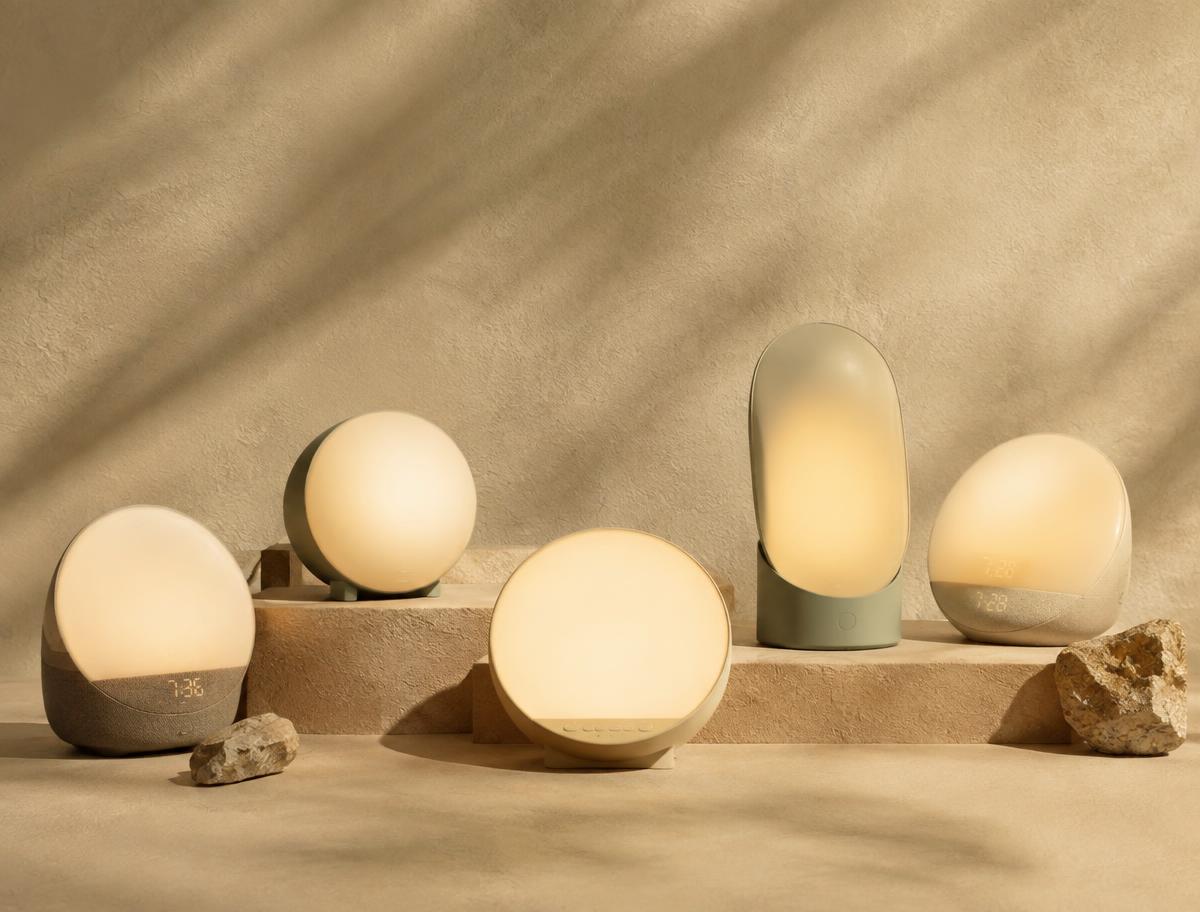
Both the Lumie Bodyclock Glow 150 and the Philips SmartSleep Wake-up Light HF3531/01 do the same essential job: they gradually brighten the bedroom before your alarm time, so that morning arrives by degrees rather than all at once.
Choosing between them is less about which logo is “better” and more about which bedside experience suits you. This is a buying comparison based on each manufacturer's published specifications — not a hands-on review — and the useful question is simply which set of features you will actually use.
At a glance
| Attribute | Lumie Bodyclock Glow 150 | Philips SmartSleep HF3531/01 |
|---|---|---|
| Reference price | £119 | £169.99 (Philips UK) |
| Sunrise duration | 20, 30 or 45 minutes | Adjustable, 20–40 minutes |
| Sunrise colour | Warm white, orange and red LED | Red through orange to yellow |
| Brightness | Adjustable sunrise intensity | 20 settings, up to 300 lux |
| Sunset | Yes, 20, 30 or 45 minutes | Yes |
| Sounds | 10 sleep/wake sounds | 7 wake-up sounds |
| Radio | No | FM |
| Alarms | Daily alarm | Two alarms |
| Snooze | Tap-control snooze | Smart/tap snooze |
| Display | Light-sensitive auto-dimming | Self-adjusting brightness |
| Other | Nightlight; dimmable bedside light | — |
| Warranty | 3 years | — |
Specifications are as published by Lumie and Philips on their official UK product pages, checked September 2026. Velquies has not physically tested these products. Prices may change.
The fundamental difference
Both perform the core sunrise function. The Glow 150 is deliberately straightforward: a sunrise and sunset, a selection of built-in sounds, a daily alarm, a nightlight and a dimmable bedside light.
The Philips adds more around the light. It offers 20 brightness settings, FM radio and a second alarm — useful if two people keep different hours, or if you want different times on different days without resetting the clock.
Sunrise experience
Lumie lists a 20, 30 or 45-minute sunrise and sunset on the Glow 150, with adjustable sunrise intensity, using an integrated warm white, orange and red LED. Philips lists an adjustable sunrise simulation of 20 to 40 minutes that moves from red through orange to yellow, with 20 brightness settings reaching up to 300 lux.
Neither approach is scientifically superior in any way that published evidence can settle. The research on dawn simulation — covered in our explainer on how sunrise alarm clocks work — does not compare these two implementations. In practice, the right sunrise depends on preference and on the bedroom itself: how dark it is, how close the light sits to the pillow, and whether a partner is still asleep.
If brightness control matters to you, the Philips' 20 settings give a clearly specified range. If you would rather choose a duration and leave it alone, the Glow 150's three sunrise lengths keep things simple.
Sounds and radio
The Glow 150 has 10 built-in sleep and wake sounds but no radio. The Philips has seven wake-up sounds plus FM radio.
If you currently wake to the radio — the morning news, a particular station — the Philips can replace a bedside radio as well as an alarm. If you would rather wake to a sound than to voices, the Glow 150's wider built-in selection may be the more relevant number. And if you plan to rely mainly on the light, with sound as a backup, the difference may matter very little.
Controls and everyday bedside use
On paper, the two share several everyday conveniences. Both offer a tap-to-snooze function, both have a display that adjusts its brightness to the room, and both include a sunset or wind-down light at night. The Glow 150 also lists a nightlight and a fully dimmable bedside light.
The clearest difference in the specifications is alarms: the Glow 150 has a single daily alarm, while the Philips has two. How easy either feels to set and live with day to day is something published specifications cannot tell you, and we have not handled both side by side, so we would rather not guess.
If you want more than the Glow 150
Lumie's range extends upwards, and it is worth knowing where it goes before assuming the Philips is the only way to get more features.
The Lumie Bodyclock Shine 300 currently offers a 15 to 90-minute sunrise and sunset, 15 sounds, FM radio and daily or weekly alarms, at a reference price of £149. The Lumie Bodyclock Luxe 750DAB adds DAB/DAB+ radio, Bluetooth and more than 30 sounds.
These are different price tiers rather than direct Glow 150 equivalents — you are paying for longer and more flexible sunrise settings, scheduling and audio, not for a different kind of sunrise.
Which makes more sense for you?
There is no overall winner here — only a better fit for particular mornings. If you are still deciding whether a wake-up light is worth it at all, start with our piece on whether wake-up lights are actually worth it.
- Consider the Lumie Glow 150 if you want a focused wake-up light, value a wider selection of built-in sounds, don't need radio and prefer to keep the bedside feature set relatively simple.
- Consider the Philips HF3531/01 if FM radio, two alarms, extensive brightness adjustment or its red-orange-yellow sunrise particularly appeal.
- Consider stepping up within Lumie's range if you want longer or more customisable sunrise durations, radio, more sophisticated scheduling or premium audio features.
Some links on this page may earn Velquies a commission. This never determines what earns a place in The Edit. Read our affiliate disclosure.
If you would like to see both alongside the rest of our shortlist, The Wake-Up Light Edit sets them out together.
The Velquies view
There isn't much value in paying for bedside technology you'll never use. Start with the morning you want, then choose the light that gets you there with the least unnecessary complication.
Key takeaways
- Both lights perform the same core job: a gradual sunrise before your alarm.
- The Glow 150 keeps things focused, with 10 built-in sounds and no radio.
- The Philips adds FM radio, a second alarm and 20 brightness settings.
- Lumie's Shine 300 and Luxe 750DAB are higher price tiers, not direct equivalents.
Sources and references
- Manufacturer specifications: Lumie Bodyclock Glow 150 — official Lumie UK product page (lumie.com), checked September 2026.
- Manufacturer specifications: Philips SmartSleep Wake-up Light HF3531/01 — official Philips UK product page (philips.co.uk/c-p/HF3531_01), checked September 2026.
- Manufacturer specifications: Lumie Bodyclock Shine 300 and Luxe 750DAB — official Lumie UK product pages (lumie.com), checked September 2026.
- Independent evidence on dawn simulation in general is summarised, with sources, in our article on how sunrise alarm clocks work. No independent study compares these two products directly.